
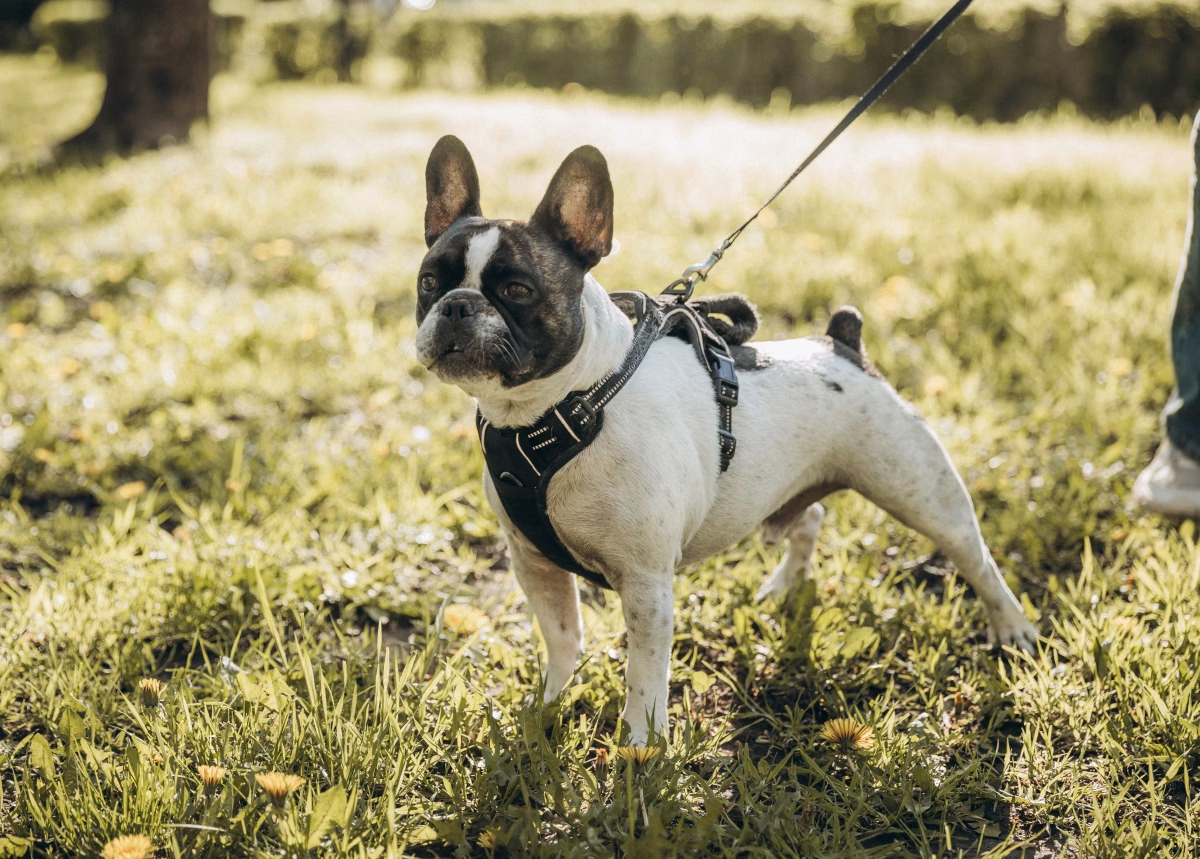
As a French Bulldog owner, you understand how much joy these small fellows bring into the lives. The walks and exercise with them are the most adorable and memorable moments.
But the unique anatomical features of these dogs, such as flat faces (brachycephalic structure), compressed airways, and delicate trachea, require special care and gear, especially during walks and playful activities.
This guide will give you evidence-based expert advice and scientific data to tell you why harnesses are the safest option for your Frenchie during walks and runs. You will learn about situations where you will understand why your pup might still need a collar.
Let's dive into the recommendations that will help you keep your Frenchie safe and sound while enjoying every moment.
Why Standard Collars Can Be Risky for French Bulldogs
Harnesses and Collars are a big debate, but both gear have their own value and needs, according to the situation. However, when it comes to Frenchies, the use of a collar is significantly less because of the associated risks.
Research has highlighted that traditional collars can exacerbate breathing difficulties in Frenchies. The occurrence of these problems is already widespread among flat-faced pets, and the use of a collar worsens it.
Besides the breathing issue, a collar can cause the following damage to your French Bulldog:
- Tracheal Damage: When the collar pulls the pup, it presses the neck region, damaging the delicate cartilage rings that support the trachea. If the pressure becomes too much, the dog can experience tracheal collapse, which is ultimately deadly for the Frenchie.
- Thyroid Complications: With the constant pressure exerted by the collar, the thyroid functions are also affected.
- Ocular Pressure: The collar pressure also creates intraocular pressure, leading to blurry vision and other eye problems in your Frenchie.
Benefits of Harnesses: What Vets and Data Say
The anatomical complications and physical limitations make the Frenchies susceptible to many health issues. Veterinary professionals prefer harnesses because they address the anatomical challenges of Frenchies.
Instead of directing all the pressure on the neck, harnesses work by distributing the pressure across the body (chest and back). This allows your pup to handle the stress of sudden pulling or strain.
A harness can offer the following benefits:
- Enhanced Control: French bulldogs are active pullers, and it becomes hard to control them during running and playful activities. Through a harness, the owner can easily control and redirect the movement.
- Pressure distribution: The pressure put on sensitive areas is reduced when a harness is used, distributing the force throughout the chest and back. Thus, the biomechanical evidence also supports the use of harnesses for the French Bulldogs.
- Temperature Regulation Benefits: Harnesses are designed and made with critical consideration for the French Bulldog's needs. They are made with breathable fabric, so the pup can easily wear them in warm weather as well.
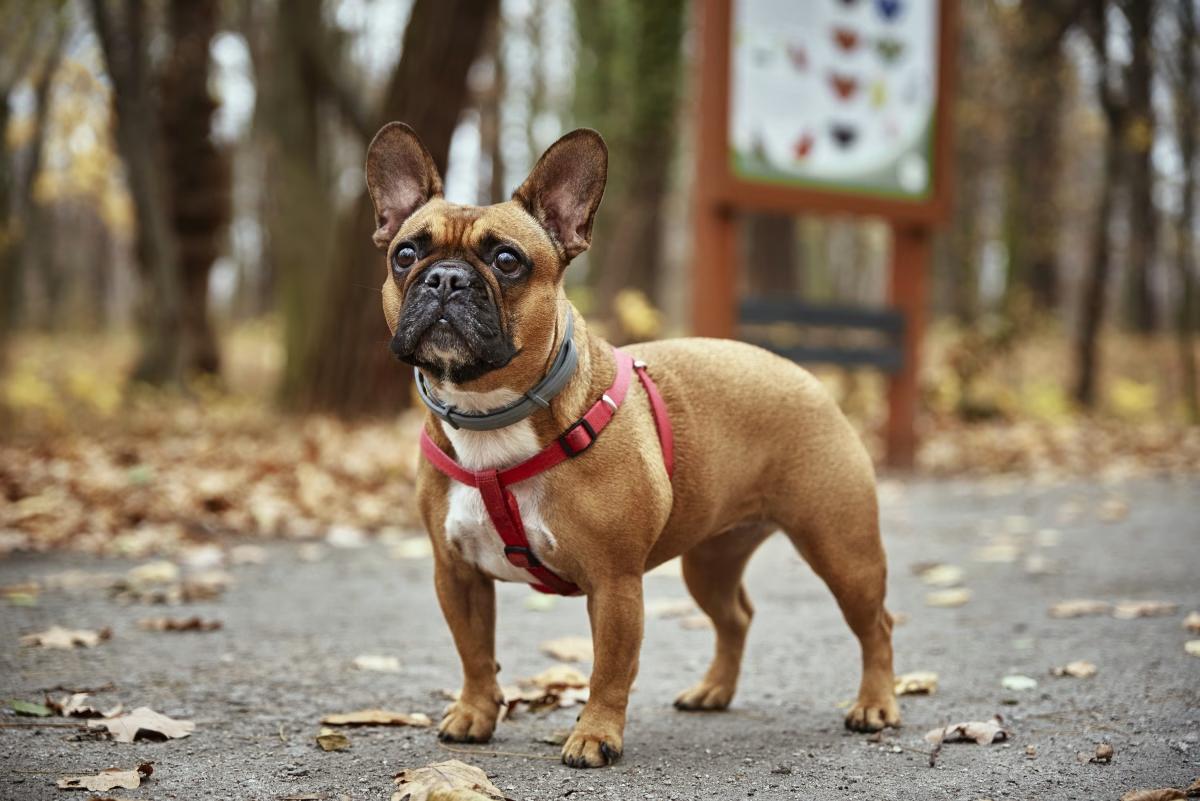
Different Types of Dog Harnesses
There are many different types of harnesses, designed considering the needs of Frenchies and their owners.
Some provide more control, while some promote comfort. What you choose depends widely on your preferences, conditions, and needs.
Back-Clip Harnesses
Best for: The French Bulldogs who are quiet and do not have any pulling issues. These include senior dogs and small puppies.
The Back-clip harnesses are the most common and are fastened on the back between the shoulder blades. The dogs are not able to find their leashes with this harness, thus they are also not able to chew them.
Pros:
- Simple design
- Comfortable to wear
- No risk of tangling with legs
Cons:
- Limited pulling control
- Not effective in handling active dogs
- Frenchies are able to use their full chest strength against the harness.
When to use: When the focus is on providing support to the elderly dogs with joint pain. It can also be used with small puppies and dogs still learning leash manners.
Front-Clip / No-Pull Harnesses
Best for: Strong pullers who need training to improve their leash behaviour.
Front-Clip harnesses, also called the no-pull harness, have their leash attachment point on the chest. This allows us to handle the pull easily, directing the dog towards their owner.
Pros:
- Effective in managing pulling behaviour
- Training support
- Better control over the pet
- Reduced strain on the neck
Cons:
- Risk of tangling between the dog’s legs during walking
- The pressure on the chest might be uncomfortable for many Frenchies.
When to use: Use it when the focus is on training young French Bulldogs to improve their pulling control and teach them to walk correctly.
Dual-Clip Harnesses
Best for: Owners who want maximum flexibility and control options.
As the name indicates, it has options for attachment of the leads on both back and front clips. Owners can use the preferred clip depending on the need and situation. The two-way usage provides the pup with a more versatile walking experience.
Pros:
- Maximum versatility
- Training according to needs
- Handles varying energy levels
Cons:
- Costly option
- Requires some learning to use
When to use: When you have more than one Frenchie at different training levels and you want a versatile solution that can be used on various dogs.
Step-In Harnesses
Best for: Dogs with larger heads compared to their necks. These include older dogs who find it challenging to use the traditional harness.
The dog can simply step into the harness rather than wearing it over the head. It is a flexible option, assisting the dog according to specific needs. And this is the whole point of the micro niche in the pet market.
Pros:
- Flexible choice
- Assistance for dogs with a larger head
- Helpful for dogs who show harness resistance
- Convenient for daily use
Cons:
- Might not be the best-fitting harness
- Some dogs might step out
- Limited adjustment options
When to use: For Frenchies who hate having a harness move over their heads. You can also use it for older dogs with limited mobility.
Mesh / Padded / Orthopedic Harnesses
Best for: French Bulldogs with sensitive skin, senior dogs with joint issues, or dogs that need extra comfort during longer walks.
It offers more than just functionality. The primary focus of this harness is breathability and comfort.
Pros:
- Extra comfort
- Best for sensitive dogs
- Prevents overheating
- Promotes breathability
Cons:
- May be less durable than basic nylon harnesses
- Padded versions might only be suitable for winter
- Hard to clean
When to use: Use it for extra sensitive dogs, such as those with sensitive skin. Older dogs can also benefit from this comfortable harness.
How to Choose the Right Fit: Size, Adjustability & Materials
The right fit of the harness ensures that the dog is safe and comfortable. To measure the correct size, follow the following approaches:
Chest and neck Measurement: To find the right size of harness for your Frenchie, compare the product’s size chart measurements with your pup’s chest (the widest part of ribcage) and neck circumference (the area where the collar usually sits).
Weight considerations: Various Frenchies might have the same weight, but their build is so different. Always prioritize measurements over weight.
Vet Advice and Training Tips
Transitioning from collars to harnesses can be a difficult task for the Frenchies, who are used to the old process. "The key is making the harness a positive experience from day one. Rush the process, and you may create lasting negative associations that make future harness use difficult."
Always focus on positive reinforcement and achieve small wins through patience approaches.
- Week 1: Simply let your French Bulldog investigate the harness by placing it near their food so they associate it with positive experiences.
- Week 2: Begin using the harness while your pup is inside the house, for a maximum of 5-10 minutes. After that, give the pup a treat or a feeding.
- Week 3: Extend indoor wearing time for the harness.
- Week 4: Begin short outdoor sessions, starting with just stepping outside and gradually building up to brief walks around the yard.
Expert Tip: If you are a puppy owner, keep in mind that your pup is rapidly growing. So if you have a harness according to their current body measurement, consider replacing it every 4-6 weeks.
Harness vs. Collar: When You Might Still Use Both
While harnesses are generally safer for French Bulldogs because they protect the airway and spine, collars still have their place.
Harness is good in situations:
- All regular walks and exercise
- Training sessions
- Car travel (with appropriate car harnesses)
- Any situation requiring control or safety
While collar suits best the situations:
- Indoor identification
- Quick bathroom breaks in fenced yards (still supervised)
- Crate time (remove during unsupervised crate time for safety)
- ID backup when the harness is being cleaned
The right approach that also ends the harness vs collar debate, and is also recommended by veterinary professionals, is the “dual approach”. This includes using harnesses for daily use and collars for specific occasions.
Conclusion
Throughout the guide, you have learned the primary role of harnesses in promoting the safety and comfort of French Bulldogs. Evidence has shown that harnesses are more versatile and safer compared to collars.
Harness is not just a gear; it is a crucial long-term investment for your pup’s health. Whether you choose a simple back-clip harness for a calm pup or a no-pull design for an enthusiastic puller, just make sure it matches your frenchie’s needs.
By following these evidence-based recommendations, you're helping ensure many years of safe, enjoyable walks with your beloved companion.

In the UK the law states all dogs MUST wear a collar with an ID tag attached to it although there are certain conditions and times when certain dogs do not need to wear them. Under the Control of Dogs Act 1992 it is a criminal offence not to so do. When in a public place pet dogs must wear a collar with their owner’s information thereon. These details can be inscribed on the collar itself, or written on a plate or badge attached to the dog’s collar.
There are some exemptions to the rule that dogs need to wear a collar with a dog tag. The exemptions apply to working or sporting dogs, those carrying out rescue work, and registered Guide Dogs all when working.
Dogs that don’t need collars when working
a) pack of hounds
b) any dog whilst being used for sporting purposes, for the capture or destruction of vermin, or for the driving or tending of cattle or sheep,or
c) any dog while being used on official duties by the Armed forces, Customs and Excise, or the police. or
d) any dog while being used in emergency rescue work, or
e) any dog registered with the Guide Dogs for the Blind Association.
If your dog isn’t wearing a collar, or their collar doesn’t include the relevant information, you can be subject to an unlimited fine, or even jail.
if a collar is not worn the dog can be seized and be treated as a stray dog under section 3 of the Dogs Act 1906 (no longer the police but dog wardens or authorised officers can seize the dog).
The fine for a dog not wearing a collar as per the law can now be unlimited fine “For crimes committed after 13 March 2015, level 5 has been done away with and all criminal penalties expressed as being punishable on summary conviction by a maximum fine of £5,000 or more, or expressed as being a level 5 fine, are now punishable by a fine of any amount (i.e. unlimited). “That’s as a result of section 85 of the Legal Aid, Sentencing and Punishment of Offenders Act 2012.
Therefore, the maximum penalty on summary conviction will be up to six months imprisonment and/or an unlimited fine,and if convicted you will also receive a criminal record !